

Whoa!
I started using a new wallet extension last month.
It felt promising from the moment I installed it.
My gut said there was somethin’ different about its UX and security assumptions.
Initially I thought it was just another MetaMask-style clone, but then after digging into its permissions model, isolation architecture, and transaction simulation features I realized Rabby approaches security and usability more thoughtfully than many browser-extension wallets on the market.
Seriously?
You can see the difference in the transaction confirmations.
They show decoded function calls and gas breakdowns before you sign.
That small change avoids lots of dumb mistakes for people who skim approvals.
On one hand the clarity reduces phishing and accidental approvals, though actually there are trade-offs because power users sometimes want compressed views and faster flows, so Rabby offers granular settings for both novices and advanced traders.
Hmm…
My instinct said the extension architecture mattered most recently.
Rabby isolates key management and doesn’t expose all accounts to every site by default.
I liked that they call it “domain isolation” and it’s not just marketing.
Actually, wait—let me rephrase that: the implementation uses a policy-driven approach to permissions and origin-level scoping, so when a dApp asks for access you can grant exactly what it needs without handing over unnecessary spending power or full account exposure across other tabs, which is a subtle but crucial difference.
Wow!
Initial setup took me less than five minutes to complete.
The UI walked me through network selection and seed backup.
I appreciated the clear warnings about seed phrases and the optional hardware support.
If you’re the type who always clicks through dialogues (guilty), the defaults are conservative enough to protect you, but you can tweak confirmations, nonce handling, and gas presets if you prefer a faster, more manual workflow.
Okay, so check this out—
Rabby also bundles an integrated swap aggregator which matters.
That gave me better rates across chains during a busy market.
I compared it to dedicated aggregators and the difference was small but consistent.
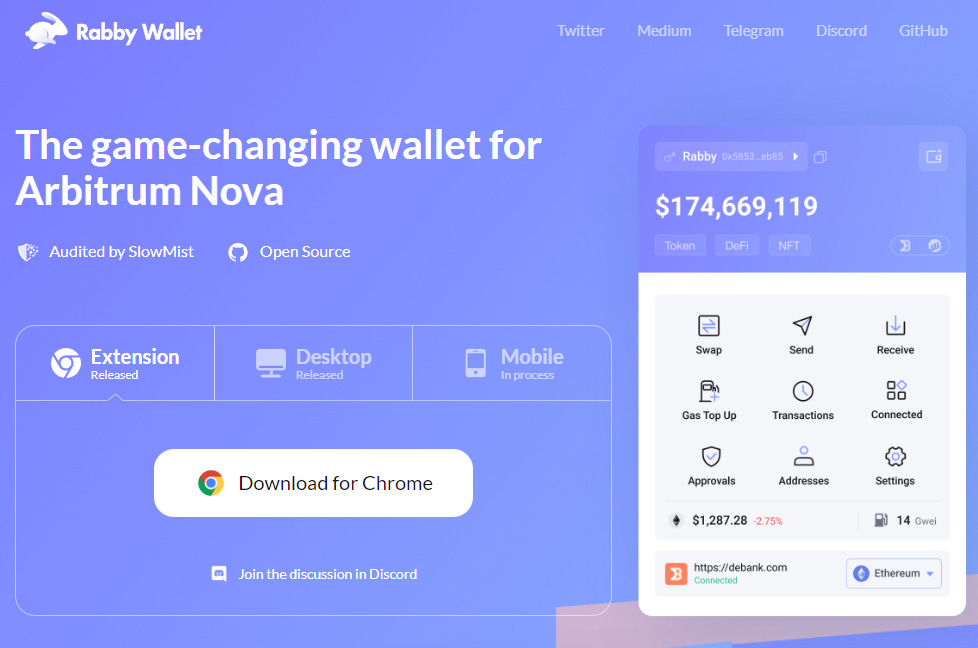
On deeper inspection the aggregator sources liquidity from multiple bridges and DEXs, and because Rabby simulates the on-chain result before you sign it reduces slippage surprises, though of course it cannot eliminate cross-chain bridge risks entirely.
Here’s what bugs me about permission models.
Many wallets ask for broad allowances by default nowadays.
Rabby takes a more conservative stance out of the box.
It encourages use of ERC-20 permit style approvals and one-time allowances.
That approach minimizes blast radius when a dApp misbehaves or when a contract has a vulnerability, so if you’re managing many tokens across networks it’s a practical safeguard that reduces your risk surface without demanding constant micromanagement.
I’m biased, but…
The multi-account experience is slick and feels native to me.
You can create multiple identities, link hardware wallets, and test on devnets easily.
It made me reorganize accounts for different strategies (long-term holding, active trading, bridging) which simplified my bookkeeping.
Something felt off about certain dApps’ clever UI tricks, so having separate identities meant I could isolate riskier interactions to a single account and keep my main holdings behind a more locked-down profile with hardware confirmations.
Try it safely
I’m not 100% sure, but overall Rabby wallet improves the browser-extension experience for many users.
It balances safety, usability, and power-user features without feeling bloated.
Speaking plainly, it lowered my accidental-approval rate and helped prevent costly mistakes during hectic market times.
If you want to try it yourself, grab the extension from the official page and test it with a small amount first to understand its settings and permission flows; you can download the Rabby extension directly from the official source here: rabby wallet.
FAQ
Is Rabby wallet safe for daily use?
Yes for typical scenarios; it’s designed with clear confirmations, domain isolation, and optional hardware support, but you should always test with small amounts and keep your seed phrase offline.
Can I connect a hardware wallet?
Absolutely—Rabby supports hardware wallets so you can combine hot-wallet convenience with cold-key security, which is very very important if you hold significant assets.
What if a dApp asks for full token allowance?
Don’t grant blanket approvals by default; use one-time allowances or set custom limits, and consider a separate account for risky interactions (oh, and by the way, revoke approvals periodically).